Blog

Blog

Last article

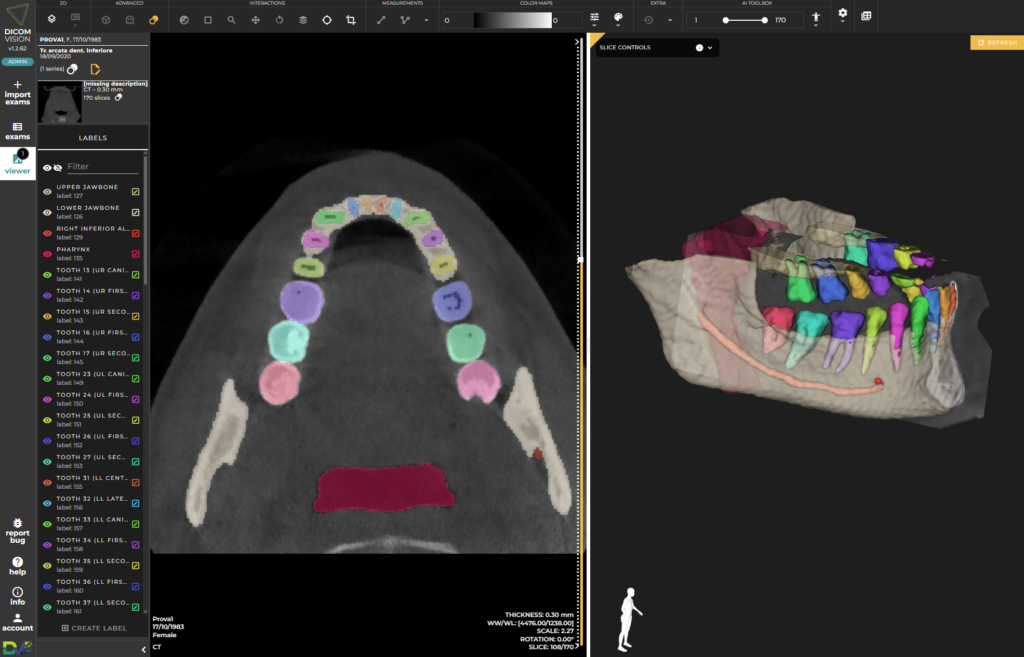
From PACS to AI dental segmentation: with DICOM Vision, we integrate TotalSegmentator and ToothFairy into a DICOM-native workflow that is smoother, more controlled, and closer to real-world medical imaging processes. An approach that reduces manual steps and makes AI easier to use, visualize, and review.

All articles

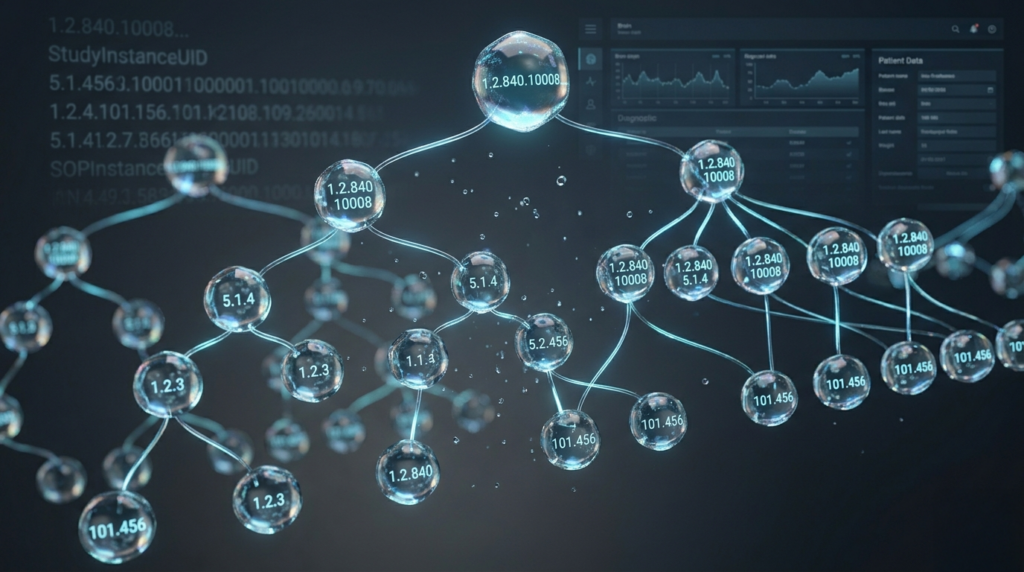
Technical guide to DICOM UID generation

This article explores the generation of DICOM UIDs, the unique identifiers used in the DICOM standard to ensure the uniqueness and traceability of medical images and examinations. After a theoretical overview of the UID structure and the constraints defined by the DICOM PS3.5 standard, the main generation approaches are analyzed: the use of a proprietary organizational root and the method based on the 2.25 root with UUID conversion. The guide also includes a complete technical implementation in TypeScript, demonstrating how to create valid UIDs that comply with the specifications and are safe against collisions and ambiguities in distributed medical systems.
Software laboratorio analisi

The DICOM Standard: What it is, how It works, and why it is essential in medical imaging

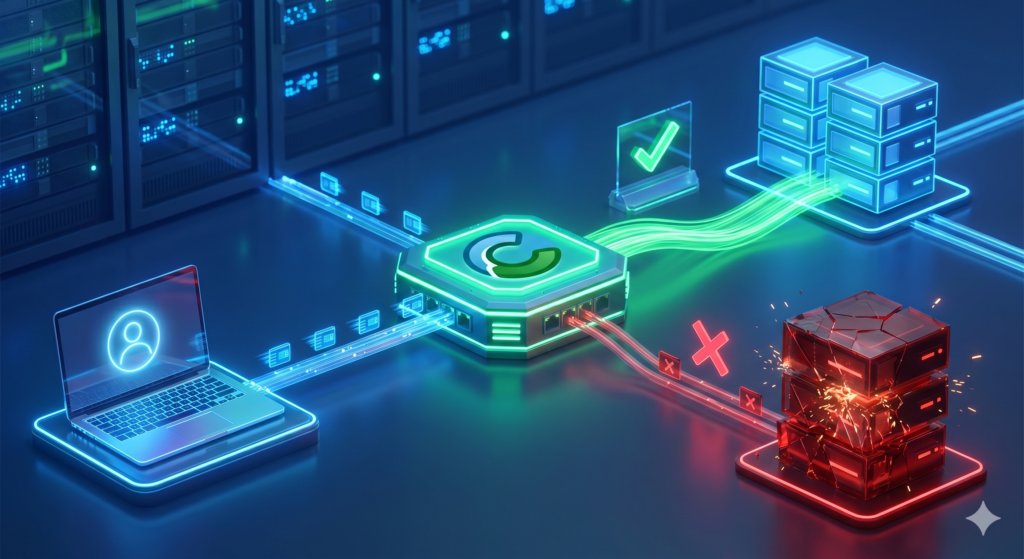
Caddy as a Load Balancer and Fallback Strategies.

In this article, we will explore how a custom tool developed with CornerstoneTools works, examining the internal mechanisms that govern callbacks, events, and state management. To make everything more concrete, we will use the TPA (Tibial Plateau Angle) as a practical case study—an especially interesting example because it requires a multi-step interaction flow and logic that is more complex than standard tools. Through this example, we will understand how to design and control each phase of a tool’s lifecycle, from the user’s initial input to the final rendering.
dicom_standard

DICOM Viewer Software: a web-based solution for viewing DICOM images online

Stop Scripting Your Setup: Why You Should Try Nix Home Manager

We have all been there. You get a fresh laptop, or maybe you finally decide to wipe your current machine to start over. The first hour feels great, but then the reality sets in: you have to configure everything again. Even if you are organized, it is a pain. You might have a repository of dotfiles and a few shell scripts you wrote three years ago to bootstrap your environment. You run them, and they mostly work. But then you start noticing the cracks. It doesn't feel exactly like your other machine.

8 people, one infrastructure

DICOM Vision: The Smart Cloud Platform for Medical Imaging